Assistant Professor in the Department of Psychiatry at the Icahn School of Medicine at Mount Sinai.
Independent Investigator and Data Scientist at the VISN 2 Mental Illness Research, Education and Clinical Center (MIRECC).
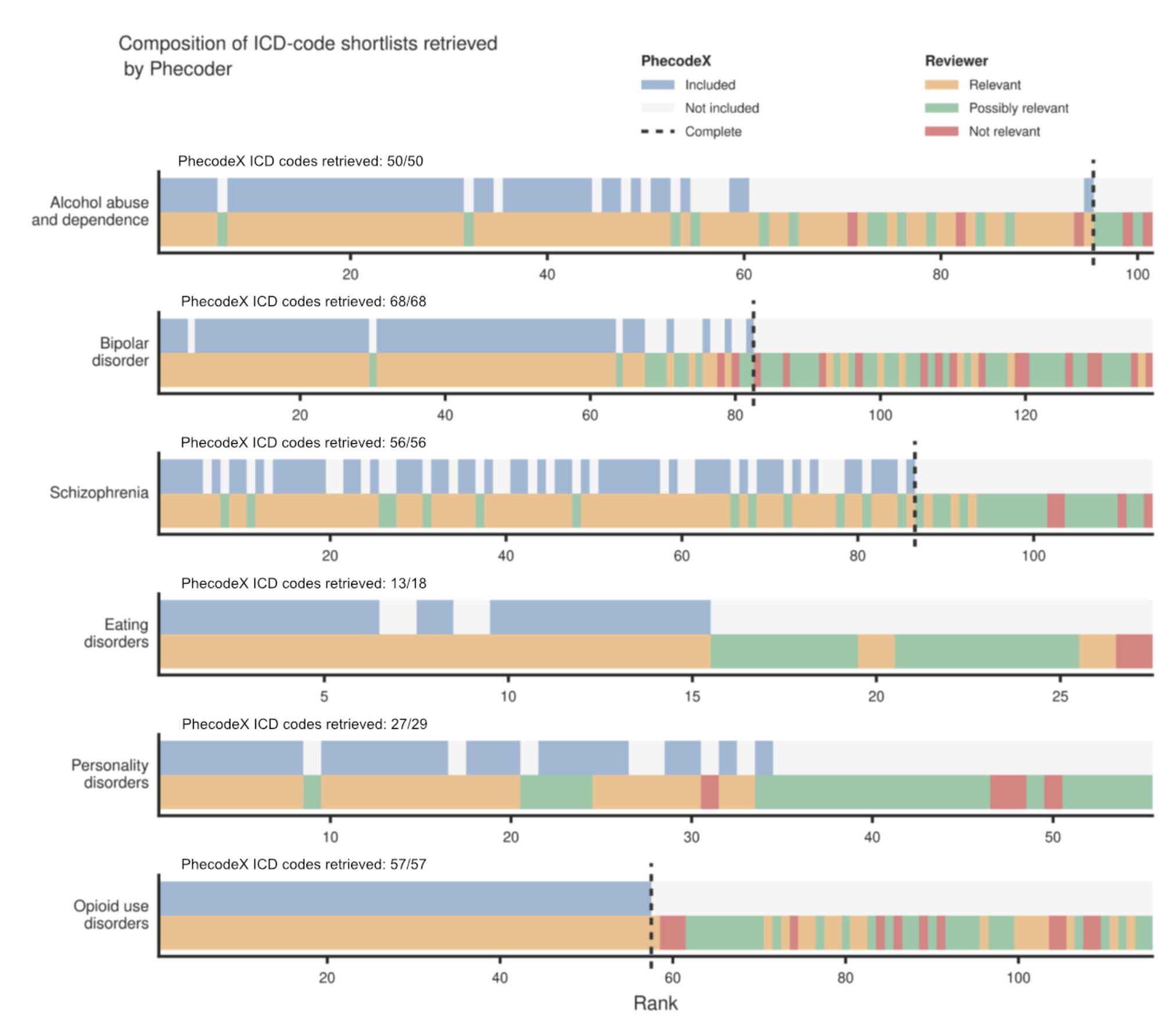
Phecoder recovers curated code lists, and surfaces candidates for expert review
My research develops and applies artificial intelligence and machine learning methods to large-scale biobank and electronic health record data to improve how neuropsychiatric traits are defined, measured, and studied at population scale. My work focuses on computational phenotyping and the integration of clinical and genetic data to support reproducible, scalable analyses, including genome-wide association studies, advancing AI-driven approaches for studying complex psychiatric conditions across diverse patient populations. In recognition of my research, I received a VA Merit Award for Mitigating Genomics Research Disparities in the Million Veteran Program.
Education
PhD in Mathematics (2011-2016)
University of Pittsburgh
BS in Mathematics (2007-2011)
University of Maryland
Summa Cum Laude and University Medal Finalist
Work Experience
Assistant Professor (2024 - Present)
Icahn School of Medicine at Mount Sinai, Department of Psychiatry
Principal Investigator and Data Scientist (2024 - Present)
James J. Peters VA Medical Center
Senior Data Scientist (2019 - 2024)
Icahn School of Medicine at Mount Sinai
Senior Data Scientist (2018 - 2019)
Fifth Third Bank
Visiting Assistant Professor (2016 - 2018)
Swarthmore College, Department of Mathematics and Statistics
Modeling diagnostic dropout boosts precision for schizophrenia
Dx dropout AUPRC = 73.4%, compared to phecode AUPRC = 62.7%
Model-derived binge-eating disorder phenotype identifies novel risk loci
Top predictors of the model, sized and colored by −log10 p
Selected Publications
Nature Genetics. September 2023
American Journal of Psychiatry. July 2024
JAMA Psychiatry. September 2022
Phecoder: semantic retrieval for auditing and expanding ICD-based phenotypes in EHR biobanks
medRxiv. January 2026. Preprint.
medRxiv. January 2025. Under review at Molecular Psychiatry.
Full publication list on Google Scholar
Selected Talks
Million Veteran Program (MVP) Science Meeting
March 2025, Virtual Talk.
American Society of Human Genetics (ASHG) Annual Meeting
November 2024, Denver, Colorado: USA.
PsycheMERGE Diversity Initiative
February 2024, Virtual Talk.
American Society of Human Genetics (ASHG) Annual Meeting
November 2023, Washington D.C.: USA.
PsycheMERGE Analysis Network Wide Call
March 2023, Virtual Talk.
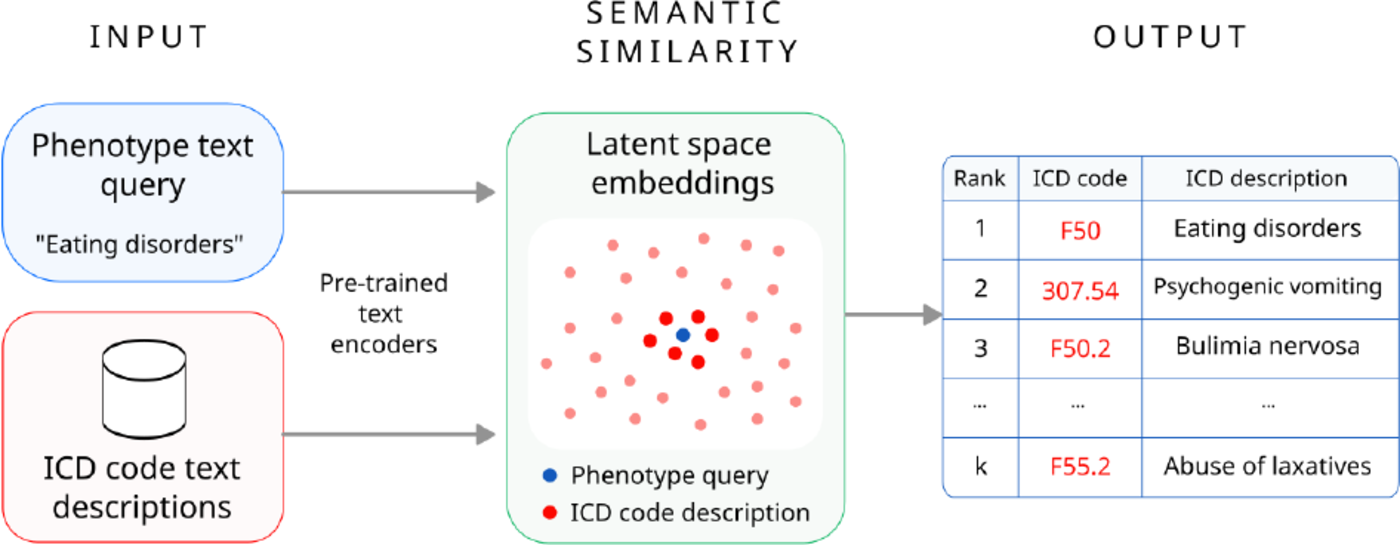
Phecoder uses an ensemble of pre-trained text embedding models to encode a free-text phenotype query and ICD code descriptions into a shared semantic space, ranks codes by similarity, and returns a top-k shortlist for expert review. The goal is to make phenotype curation in EHR biobanks more transparent, reproducible, and scalable. Read the preprint. View code.
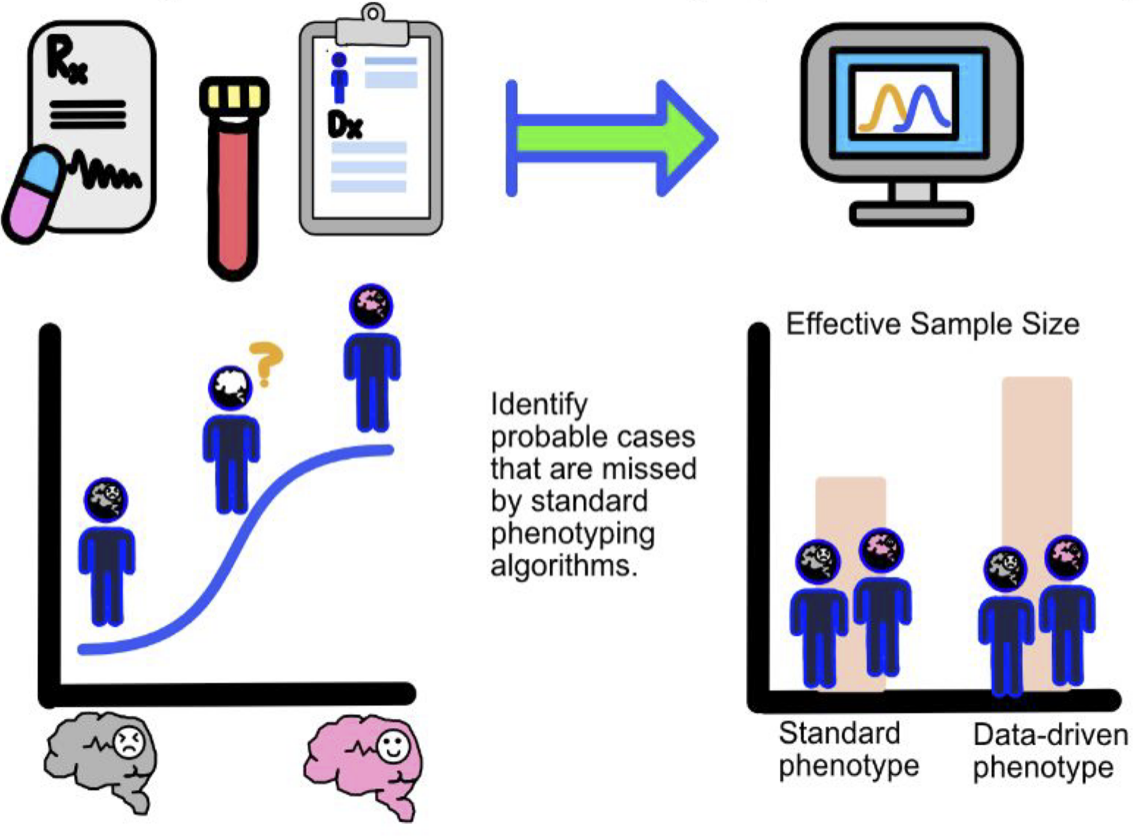
Binge-eating disorder (BED) is extremely underdiagnosed. Only 0.1% of Veterans have the diagnosis, in contrast to the established prevalence of 3% in the United States. We developed a machine learning model to predict BED from electronic health record (EHR) data to recover these missing cases and power a genome-wide association study of BED, yielding 3 novel genome-wide significant loci. Read the paper.
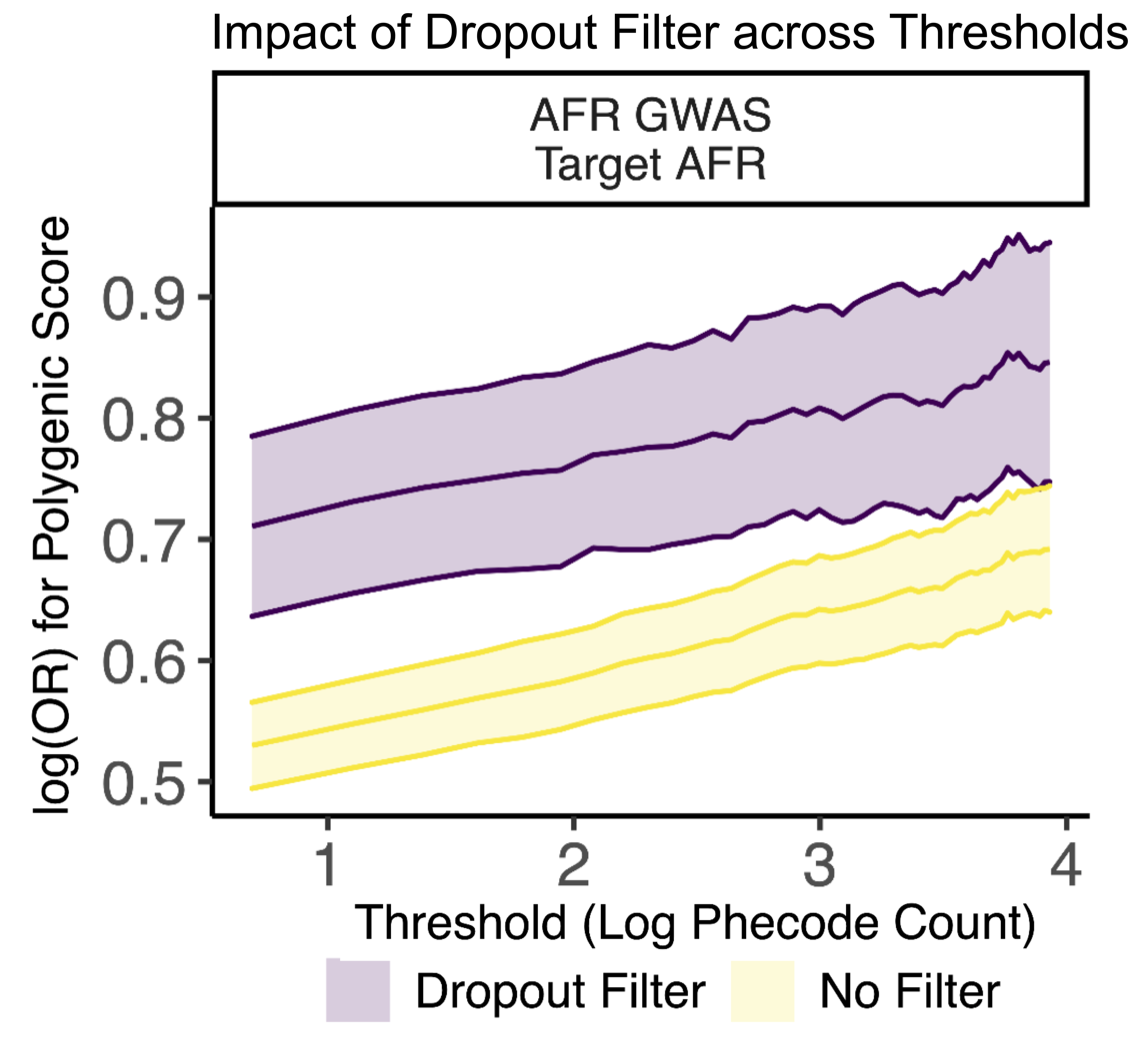
We model the discontinuation or dropout of diagnostic codes to identify diagnoses that suggest diagnostic uncertainty for schizophrenia. By applying our data-driven filter, we achieve a 33% increase in the association effect size when the training and target cohort both share African ancestry. Read the preprint.
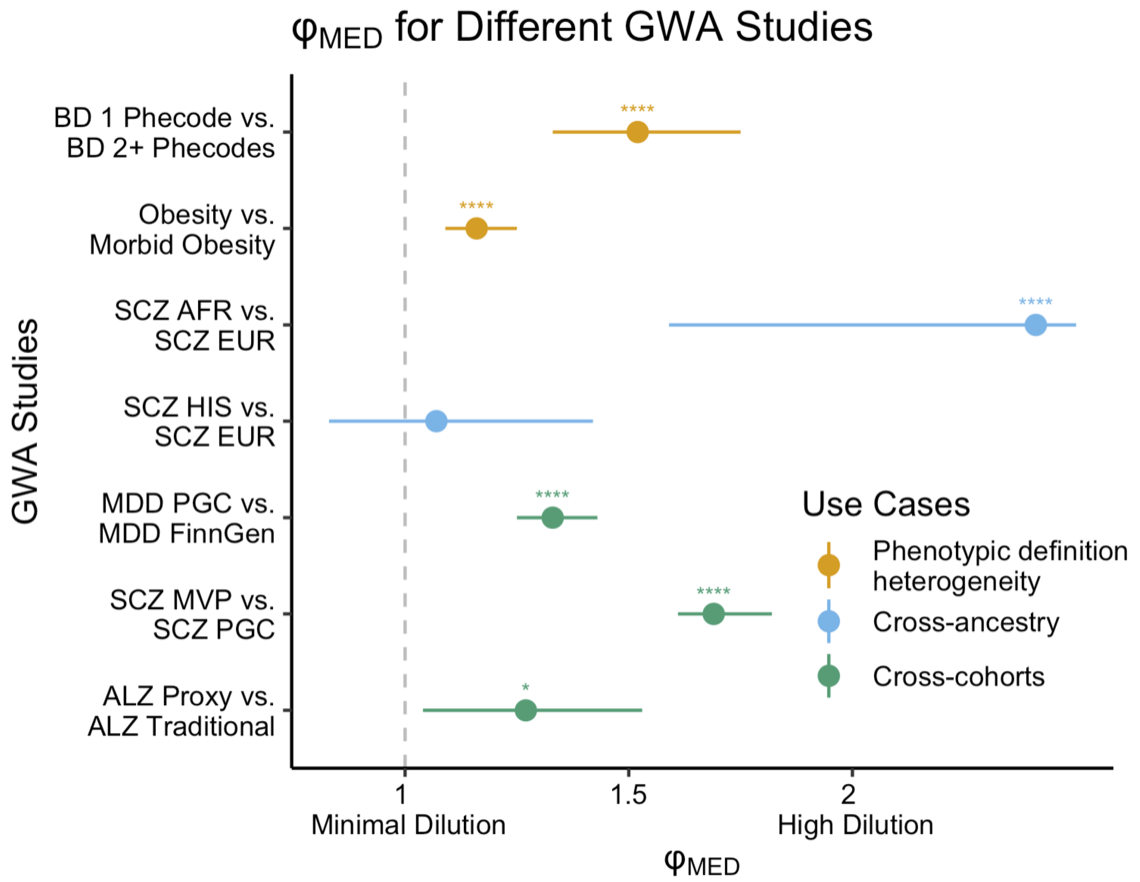
With the advent of genotyped biobanks, genome-wide association studies (GWAS) leverage larger sample sizes and introduce noisier phenotypic definitions. Here, we develop a statistical method, PheMED, that leverages GWAS summary statistics to quantify genome-wide effect size dilution across different phenotypic definitions and cohorts. Read the paper.
Jamie Bennett, PhD
Senior Data Scientist
Sonali Gupta, MS
Bioinformatician
Sofie Glatt, BA
Data Scientist, Volunteer
Now attending the AI and Emerging Technologies in Medicine PhD program at Mount Sinai.
Click anywhere outside the figure, or press Esc, to go back
If you have any questions or would like to get in touch, please email me at .